
Varicose Vein Treatment Melbourne
Looking for varicose vein treatment Melbourne? Enlarged, bulging veins causing pain, swelling, and heaviness are highly treatable. Our ultrasound-guided minimally invasive procedures deliver lasting results with walk-in, walk-out convenience.
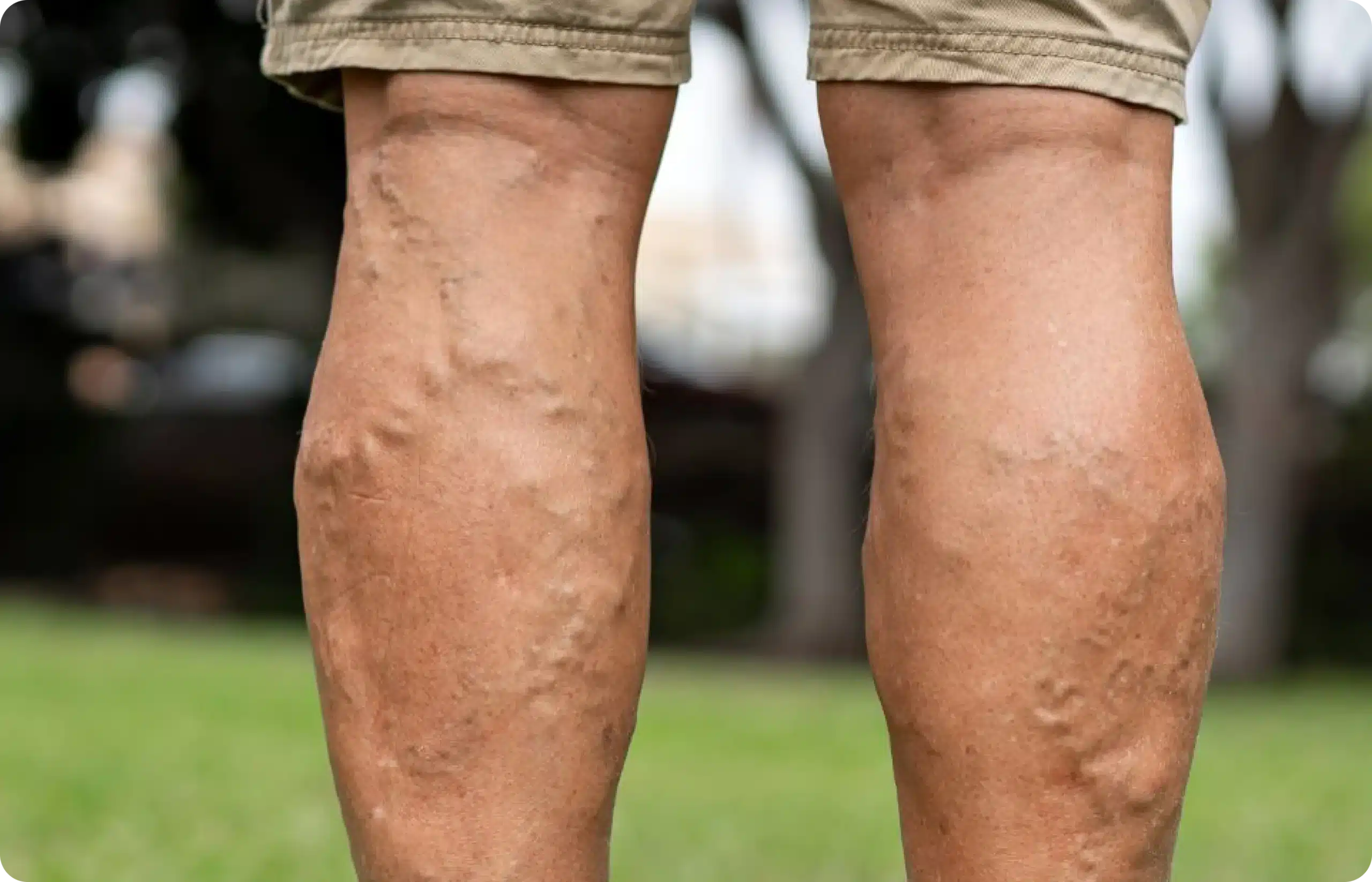

What are varicose veins?
Varicose veins are enlarged, twisted veins that bulge above the surface of your skin. They develop when one-way valves inside leg veins weaken, allowing blood to pool and veins to enlarge. They're blue in colour because of the vein thickness and reduced oxygen in pooled blood.
What causes varicose veins?
Varicose veins develop when one-way valves in surface veins weaken or fail. Blood pools instead of flowing upward to the heart, causing veins to enlarge and bulge. Genetics play the strongest role, but secondary factors like standing pressure trigger the condition in susceptible people.

The valve failure process
One-way valves in veins push blood upward to the heart. Vein walls are elastic and properly support blood flow. See how leg veins work.
Vein walls stretch due to genetics and pressure. Valves no longer seal completely. Blood begins to backflow.
Blood pools in the vein instead of moving upward. Increased pressure further stretches the vein wall.
The vein becomes visibly enlarged and bulges above the skin. Symptoms like heaviness and aching develop.
Who is at greatest risk?
Around 30% of adults develop varicose veins. Several factors increase your risk, and many are beyond your control. Genetics is the strongest predictor.
Genetics
If your parents have varicose veins, your risk is significantly higher. The tendency toward weak vein valves and stretched vein walls runs in families. Read more on what causes leg veins.
Women more affected
Women are twice as likely to develop varicose veins. Risk increases with age due to cumulative pressure and valve wear over decades.
Pregnancy & hormones
Pregnancy significantly increases risk due to weight gain, increased blood volume, and hormonal changes. Oral contraceptives also increase risk.
Standing & obesity
Jobs requiring prolonged standing increase pressure on leg veins. Excess weight adds to this pressure. Both are modifiable risk factors.
What symptoms do varicose veins cause?
Many people have no symptoms, but others experience significant discomfort. Symptoms are often worse after standing or sitting for long periods and may improve with leg elevation or compression stockings.
What are the complications?
Long-standing varicose veins can cause chronic venous insufficiency if left untreated. Skin changes, reduced healing, and increased blood clot risk are possible complications that early treatment prevents.
Early treatment prevents complications. If you have varicose veins with symptoms or signs of skin changes, treatment now prevents long-term complications and improves quality of life significantly.
How we treat varicose veins
Treatment depends on vein location and severity. An ultrasound scan determines whether underlying reflux exists, which guides treatment selection. Surface veins and deep vein reflux require different approaches.
Endovenous Laser Ablation (EVLA)
A thin laser fibre seals the damaged vein from inside. Guided by ultrasound, it treats the source of reflux. Gold standard for truncal varicose veins. Also called EVLT.
Radiofrequency Ablation (RFA)
Radiofrequency energy seals the vein in controlled segments under ultrasound guidance. Slightly less bruising than laser for some patients, with equivalent long term results. Known by the brand names CLOSUREFAST and VENEFIT.
Ultrasound Guided Sclerotherapy (UGS)
Foam sclerosant injected under ultrasound guidance into deeper veins. Closes tributary and residual veins. No anaesthetic needed.
Endovenous Medical Glue
A medical grade adhesive seals the vein without heat and without anaesthetic injections along the leg. Most patients avoid compression stockings afterwards and return to normal activities straight away. Also known as VenaSeal.
Compare all six treatments or see fees and Medicare rebates.
What's the recovery like?
Most patients walk out and return to work the same day. Minor bruising or temporary discomfort is normal. Improvement begins within 1-2 weeks, with full results at 8-12 weeks.
Post-treatment care

Common questions about varicose vein treatment
Clear answers to help you feel informed and ready for treatment.
Do I need ultrasound imaging before treatment?
Yes. An ultrasound scan determines whether you have reflux in the deep vein system. This guides treatment selection and ensures the best outcomes. It's a painless, non-invasive scan.
Will treated veins come back?
No. Sealed veins don't reopen. However, if you have other damaged veins or genetic predisposition, new varicose veins may develop over time. Regular follow-ups help catch new veins early.
Can I have both legs treated at once?
Typically we treat one leg first, then the other 2-4 weeks later. This allows proper monitoring and reduces post-treatment impact. Both can be treated in the same visit if urgently needed.
Are varicose vein treatments covered by Medicare or insurance?
Medicare covers treatments when symptoms or complications are present. Private insurance policies vary. Full costs are set out on our fees page, and we confirm your rebate eligibility during the consultation.
Can I have treatment during pregnancy?
We recommend waiting until after pregnancy and breastfeeding. Many varicose veins improve postpartum. If symptoms are severe, we can discuss safe management options during pregnancy.
What if I have both spider and varicose veins?
Treat varicose veins first. This controls underlying reflux and often improves associated spider veins. Remaining spider veins are then treated as a secondary procedure for best results.
Stop living with varicose veins
Pain, swelling, and self-consciousness don't have to be part of your life. Our vein doctors deliver lasting results with walk-in, walk-out convenience. Take the first step toward healthier legs today.
No waiting lists. Elite medical standards. Your privacy is our priority.
Not ready to book yet? Ask us first.
Send us a question about your veins, the treatments, or what a consultation involves. Your enquiry is confidential, and a member of our Melbourne team will reply within one business day.
Suite 14/45 Collins St, Melbourne VIC 3000