
Telangiectasia Treatment in Melbourne
Telangiectasia treatment Melbourne targets the finest of the spider veins: thin red lines less than 1 mm wide, sitting right at the skin surface. They respond well to surface laser and VEINGOGH radiofrequency, with no downtime.
What is telangiectasia?
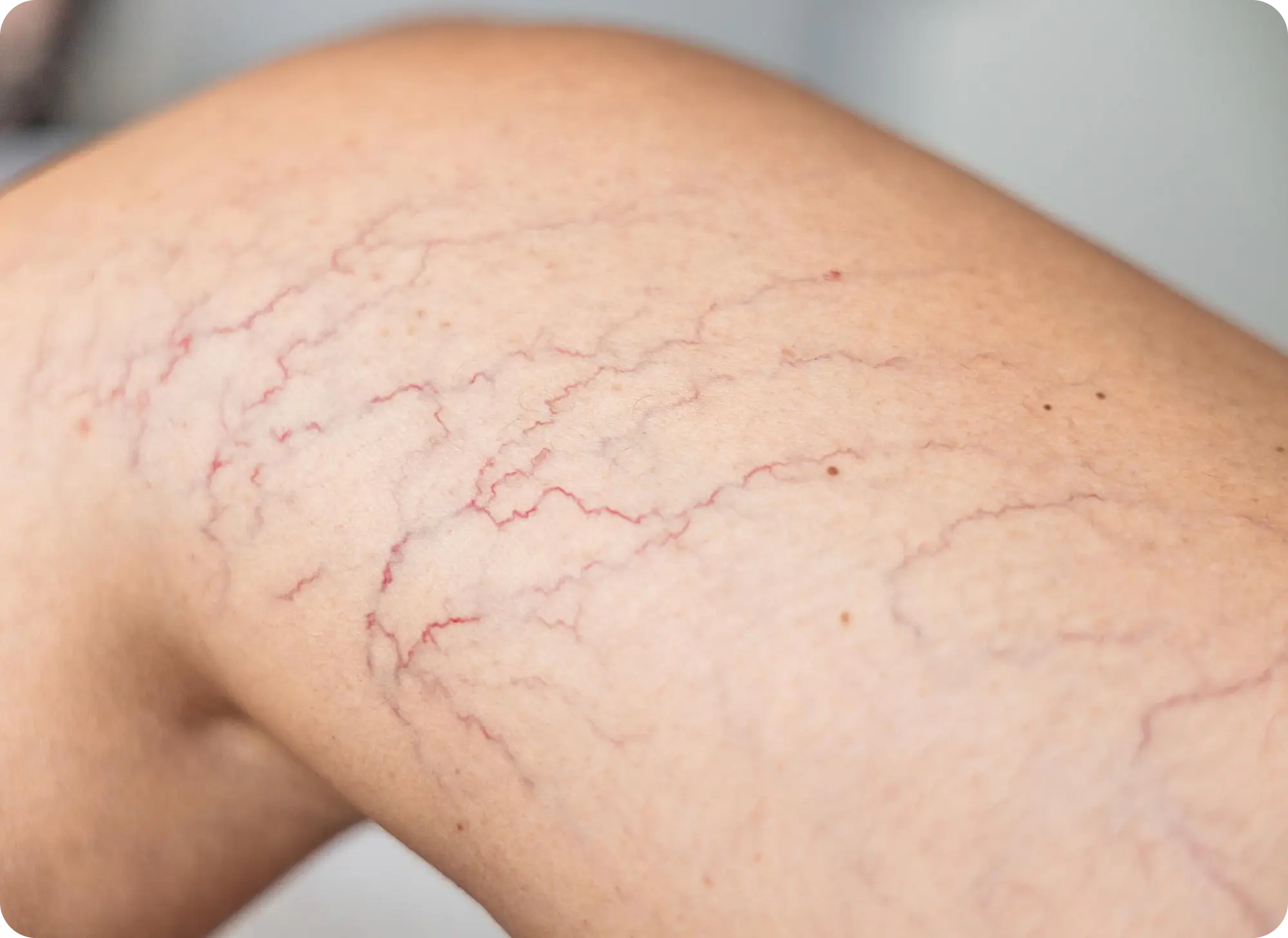
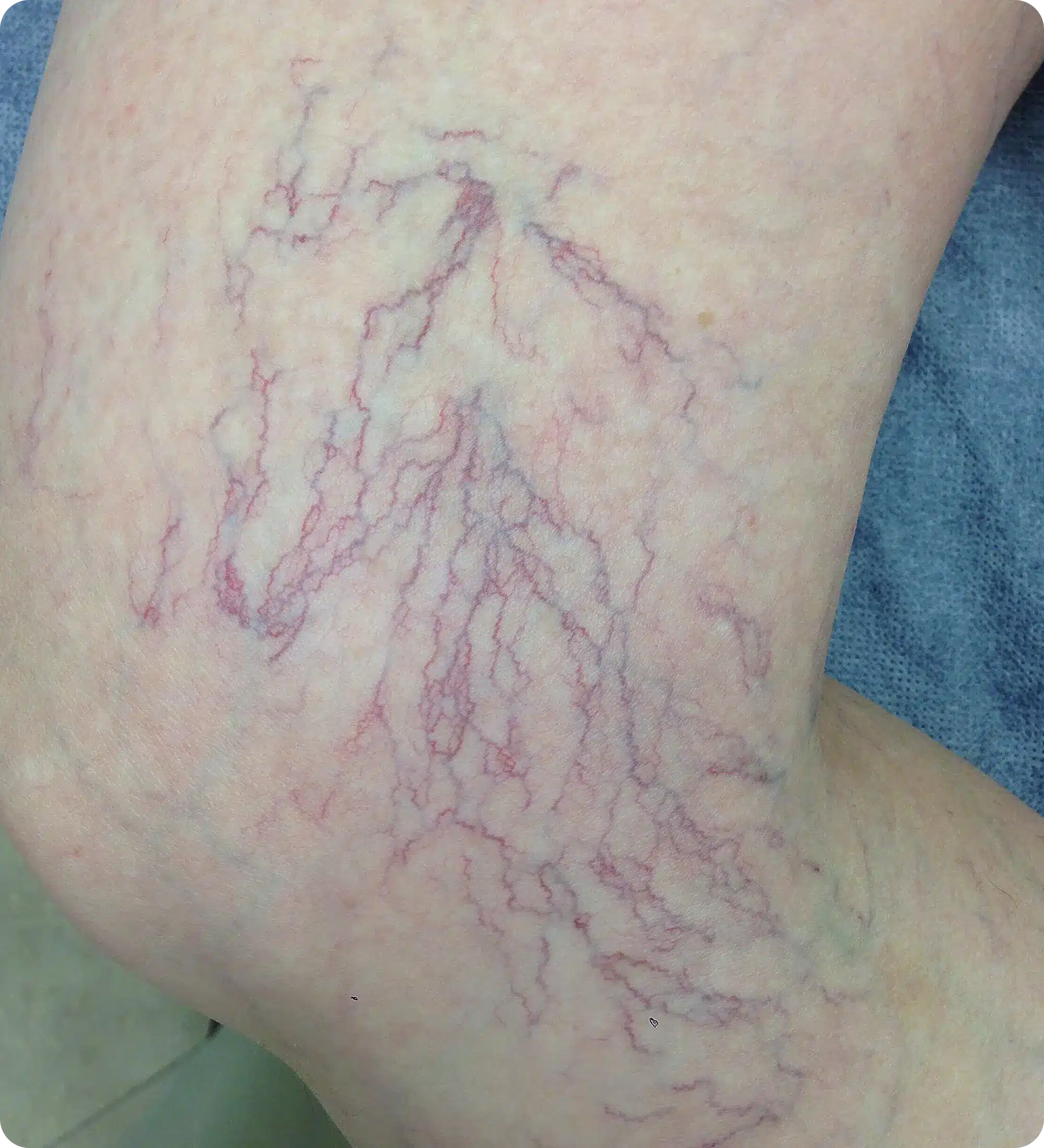
Telangiectasia treatment Melbourne addresses telangiectasia, the medical name for the tiniest dilated blood vessels at the skin surface. On the legs they appear as fine red or pink threads, sometimes single lines and sometimes a fan or starburst. Because they are so small and shallow, they are the veins that respond best to heat-based treatments applied from outside the skin.
What causes telangiectasia?
These fine vessels dilate when the pressure in the small surface veins rises or the vessel wall weakens. Family history is the strongest factor. On the legs, telangiectasia is often fed by a reticular vein beneath it, which is why we assess the whole area rather than just the visible lines.
Does telangiectasia cause symptoms?
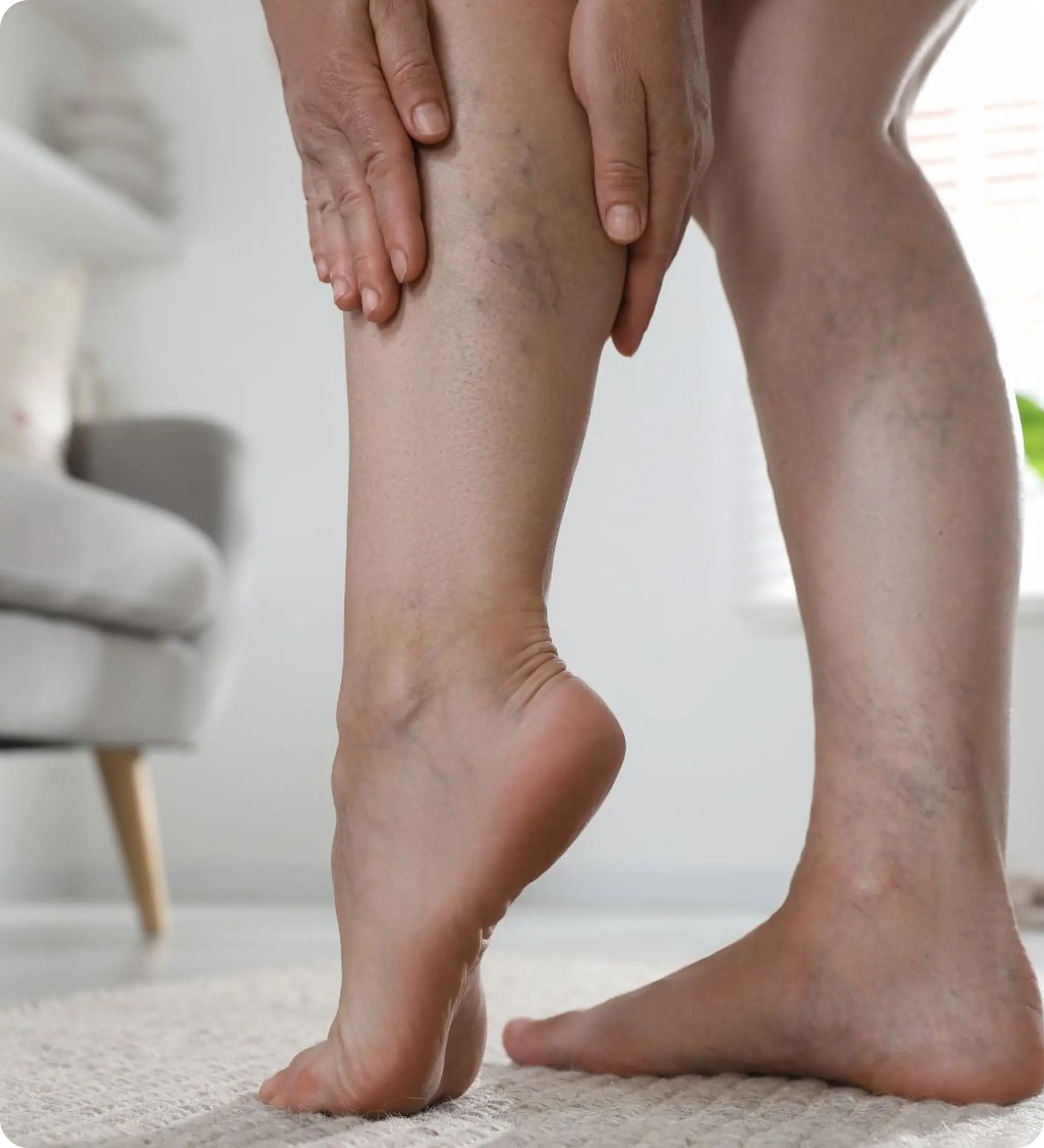
Telangiectasia is almost always a cosmetic concern rather than a medical one. Occasionally patients notice mild itching or a warm feeling over a cluster, particularly in hot weather. If there is aching or heaviness, that usually points to a larger feeder vein that should be assessed.
Most patients seek treatment for:
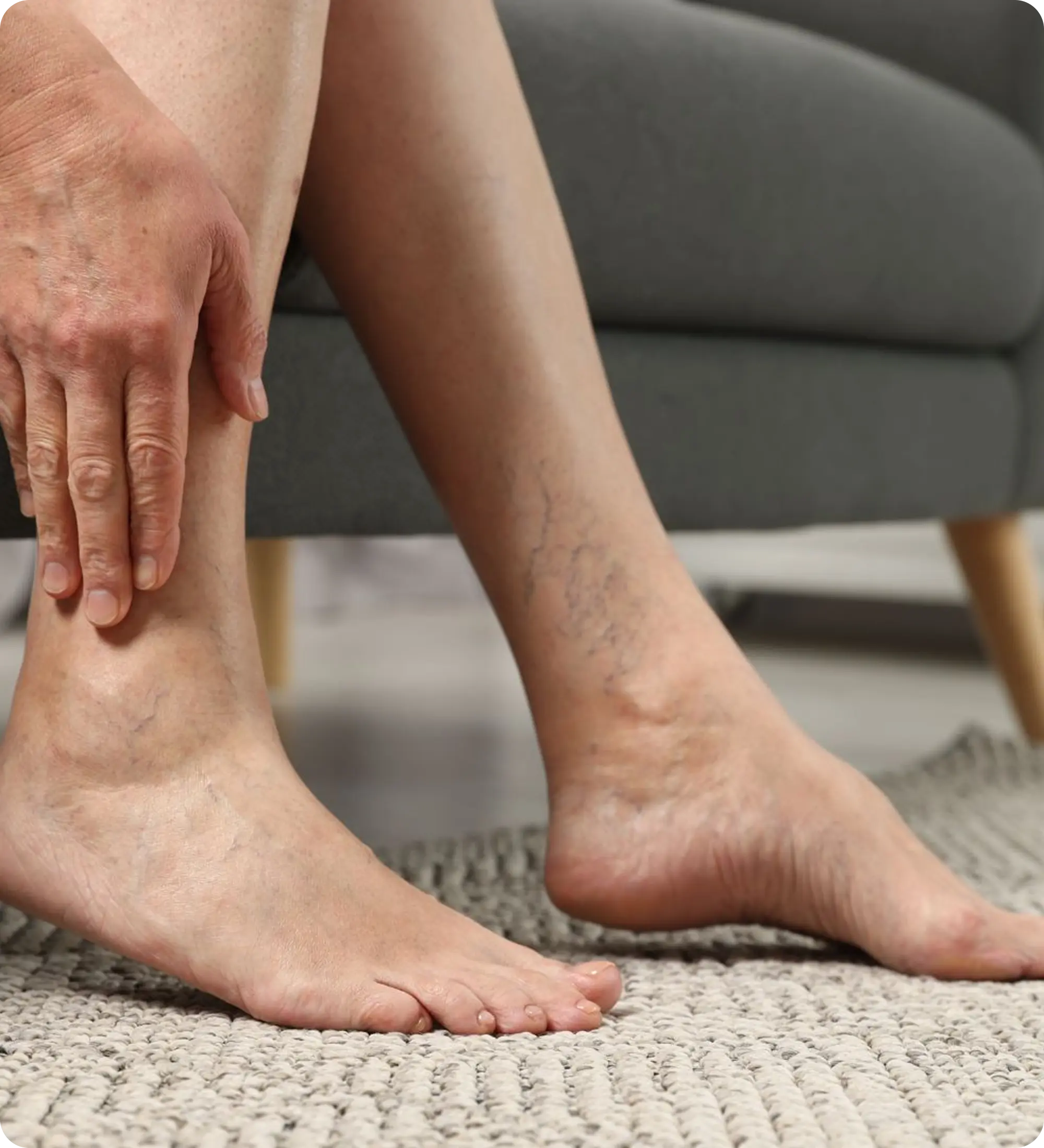
Fine red lines or starbursts on the thighs, calves or ankles that are visible in shorts or swimwear.
A small patch that gradually grows into a wider network over months or years.
Wanting clear-looking legs without having to cover them or use camouflage makeup.
How we treat telangiectasia
Because these vessels are so fine and shallow, they suit treatments that seal the vein through the skin without a needle entering it. Surface laser and VEINGOGH radiofrequency are the main options. Slightly larger red or purple vessels may still be better suited to microsclerotherapy.
Surface Laser Vein Treatment
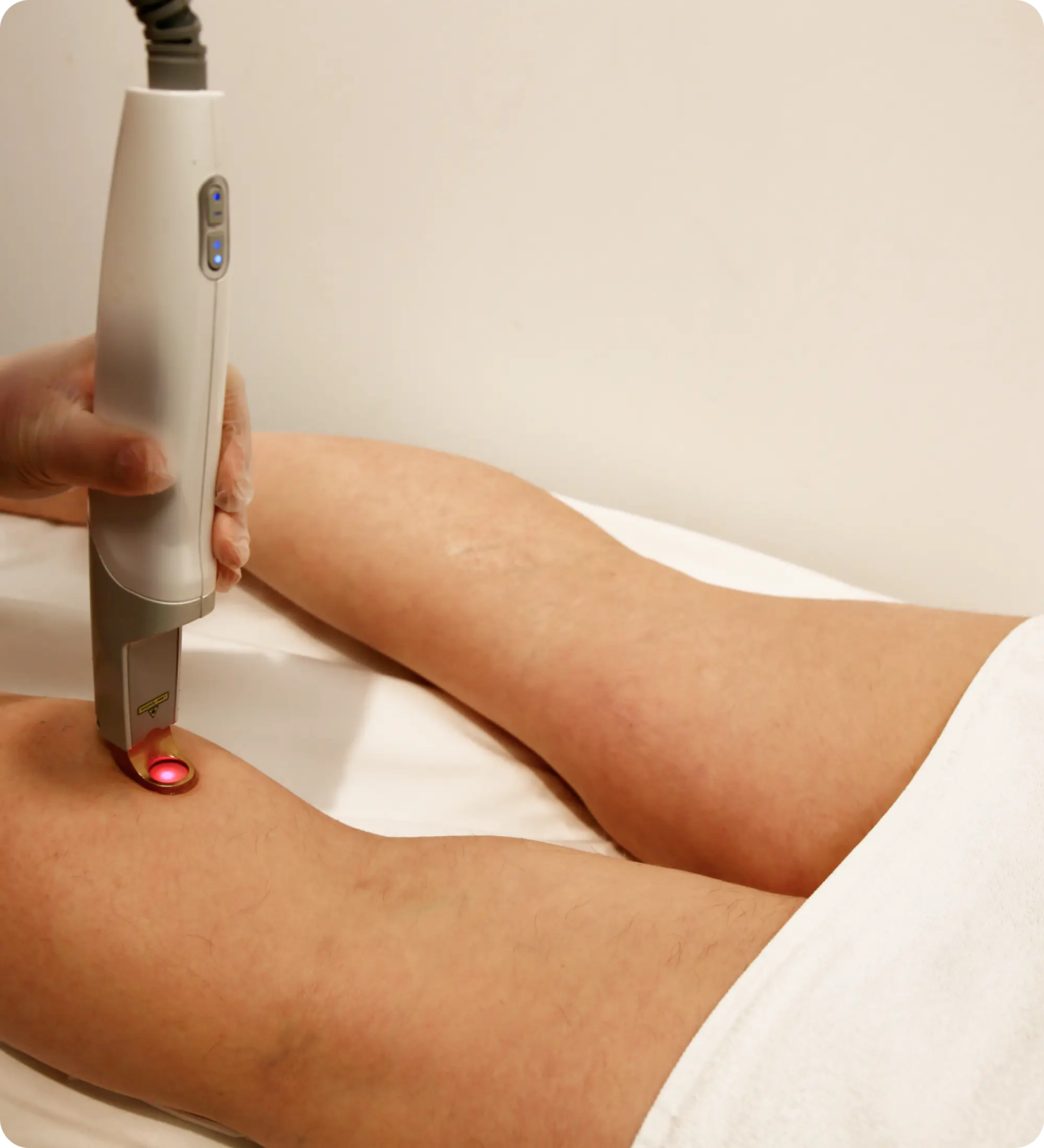
A focused beam of light is absorbed by the blood in the vessel, heating and sealing it. We use the Cutera Excel V laser. Excellent for fine red telangiectasia. Feels like a brief snap of a rubber band. No needles.
VEINGOGH Radiofrequency
A hair-fine probe delivers a controlled burst of radiofrequency energy that closes the vessel instantly. Precise enough for the smallest veins, including those laser can miss.
Surface Sclerotherapy
For telangiectasia that is a little larger or connected to a feeder vein, a very fine needle injects a small amount of sclerosant to close the vessel. Also called microsclerotherapy. Often combined with laser or VEINGOGH, and with reticular vein treatment where a feeder is present.
Compare all six treatments or see fees and Medicare rebates.
Important: Check for feeder veins first
Telangiectasia on the legs is often supplied by a reticular vein you cannot see. If the feeder is not treated, the fine vessels tend to come back. Your consultation includes an assessment of the surrounding veins so the feeder is closed first and the surface treatment lasts.
What results can you expect?
Treated vessels fade progressively over 4 to 8 weeks as the sealed vein is absorbed. Very fine vessels sometimes disappear at the time of treatment, while others darken briefly before fading.
Timeline after treatment
Redness, slight swelling or small welts along the treated lines are normal and settle within hours to days. Tiny crusts may form. Do not pick them. Keep the area out of the sun.
Treated vessels darken, then begin to fade. Some fine vessels are already gone. Avoid hot baths, saunas and vigorous exercise for the first week.
Most of the treated vessels have faded. Remaining or new vessels are reviewed and treated at your next session, usually 4 to 6 weeks apart.
Common questions about telangiectasia treatment
Clear answers to help you feel informed and confident about your treatment options.
Is telangiectasia the same as spider veins?
Telangiectasia is the medical term for the smallest spider veins, the fine red ones under 1 mm wide. Slightly larger blue or purple spider veins are called venulectasia, and the feeder veins beneath them are reticular veins.
Which is better, laser or VEINGOGH?
Both close fine red vessels well. Laser suits longer runs of vessels. VEINGOGH is very precise for tiny individual vessels and for areas around the ankle. We often use both across a course of treatment.
Does it hurt?
Most patients describe a brief hot snap with each pulse. No anaesthetic is needed and the sensation stops as soon as the treatment does. Cooling is used with laser to protect the skin.
Will it leave marks?
Temporary redness, small welts or tiny crusts are common for a few days. Brown staining or light patches are uncommon with fine red vessels but are more likely if the area is exposed to sun during healing, so sun protection matters.
Can I have treatment if I have a tan?
Laser needs untanned skin, so we may ask you to wait or use VEINGOGH instead. Avoid sun exposure and fake tan on the area for a few weeks before and after treatment.
Do I need a GP referral?
Not for a consultation. A referral is only needed if a detailed mapping scan is recommended and you wish to claim a Medicare rebate on it. Full costs are set out on our fees page.
Ready to treat your telangiectasia?
Fine red veins are the most treatable leg veins of all. A consultation confirms whether laser, VEINGOGH or a combination will give you the clearest result.
No GP referral needed for a consultation. Your privacy is our priority.
Not ready to book yet? Ask us first.
Send us a question about your veins, the treatments, or what a consultation involves. Your enquiry is confidential, and a member of our Melbourne team will reply within one business day.
Suite 14/45 Collins St, Melbourne VIC 3000