

Foam sclerotherapy is one of the ways ultrasound guided sclerotherapy can be delivered. If your doctor has mentioned foam, or you have seen the term while researching treatment for larger veins, this guide explains what it is and what to expect.
It is general information about treatment at Melbourne Leg Vein Centre (MLVC), not personal medical advice.
What is foam sclerotherapy?
Sclerotherapy uses an injected solution to irritate the wall of a vein so it closes and is gradually absorbed by the body. In foam sclerotherapy, the solution is mixed with gas to make a foam before it is injected. The foam fills the vein, moves blood out of the way and stays in contact with the vein wall, which helps the vein close.
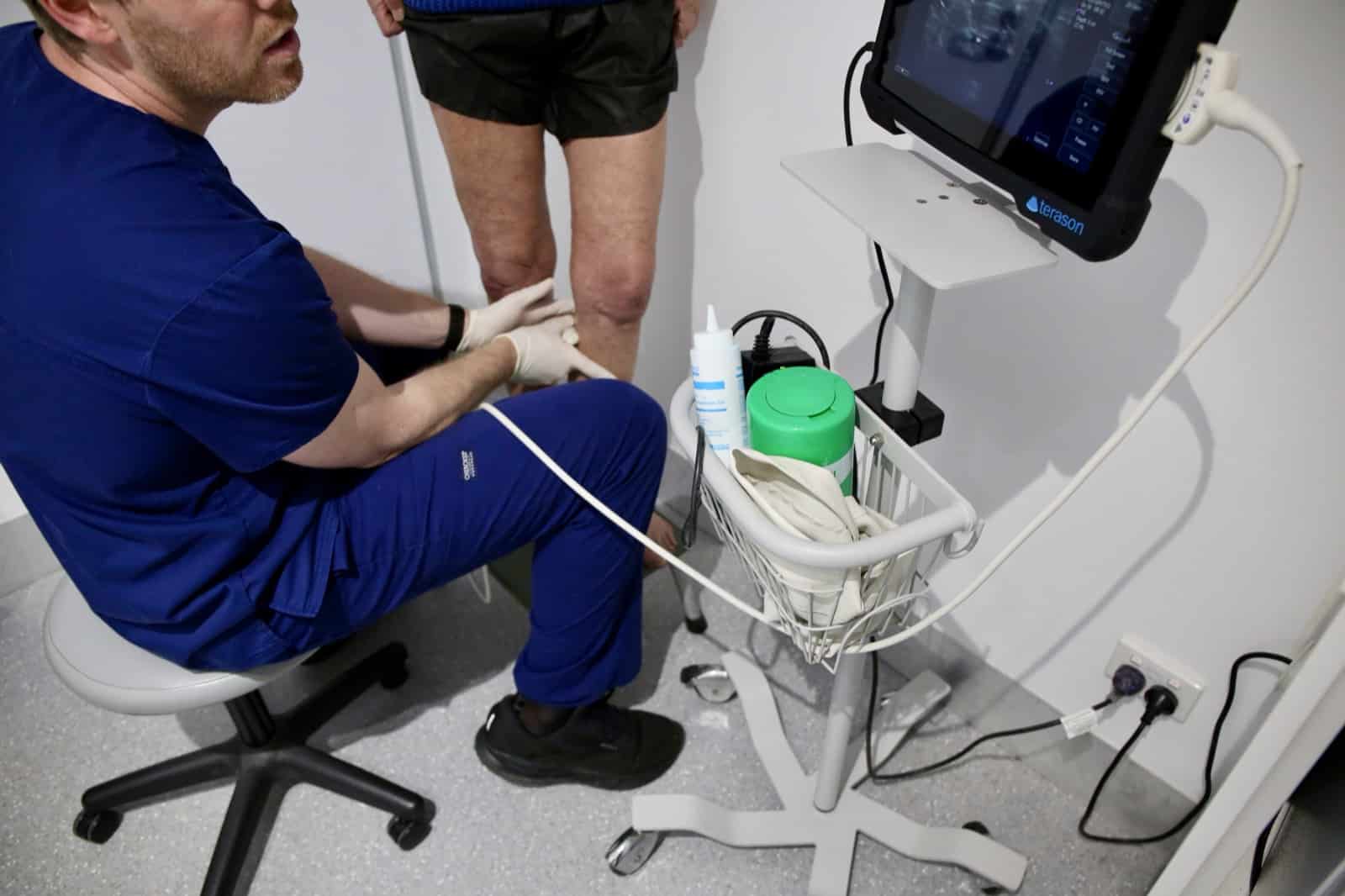
Why ultrasound is used
Foam is injected under ultrasound guidance. The doctor can see the needle and watch where the foam travels, which helps place it where it is needed and avoid areas it should not reach. This is especially useful for veins that cannot be seen or safely treated by eye alone.
Liquid or foam: how your doctor chooses
Ultrasound guided sclerotherapy comes in two main forms, liquid and foam. Which one is used depends on the size of the vein and how far the solution needs to travel along it. Both are delivered through a fine needle under ultrasound guidance. You can read more on our ultrasound guided sclerotherapy page.
What happens at your appointment
- Your doctor examines your legs and reviews your history.
- Ultrasound is used to map the veins and check how blood is flowing.
- The solution, as liquid or foam, is injected into the targeted vein under ultrasound guidance.
- Compression is applied, and you are advised on walking and aftercare.
Recovery and aftercare
Your doctor will give you instructions that suit your treatment, which commonly include wearing compression stockings for a period and walking regularly. Some bruising, tenderness or darker discolouration along the treated vein is common. Our guides explain the usual pattern of bruising after sclerotherapy, and what trapped blood is and how it is treated.
Risks and side effects
Like any procedure, sclerotherapy has possible side effects and risks. Your doctor will explain these, and how they apply to you, at your consultation before any treatment goes ahead.
Cost and Medicare
Cost depends on the veins treated and the number of sessions. Medicare rebates may apply in some cases where the criteria are met. See our guides to treatment costs and Medicare coverage, or the fees page.
Frequently asked questions
Is foam sclerotherapy different from ultrasound guided sclerotherapy?
Foam is one of the forms of ultrasound guided sclerotherapy. The other is liquid.
Does it hurt?
Most people describe a brief sting or pinch at the injection, and some mild cramping can occur. Your doctor will explain what to expect.
How many sessions will I need?
This depends on the size and extent of your veins and how they respond. Your doctor can give you a clearer estimate after an assessment.
Do I need a referral?
No. You can book a consultation without a GP referral.
Next steps
To find out whether foam or liquid sclerotherapy suits your veins, book a consultation at Suite 14, 45 Collins Street, Melbourne, or explore the full range of leg vein treatments.
This article is general information and is not personal medical advice. Suitability for any treatment can only be decided by one of MLVC’s doctors after an individual assessment.