
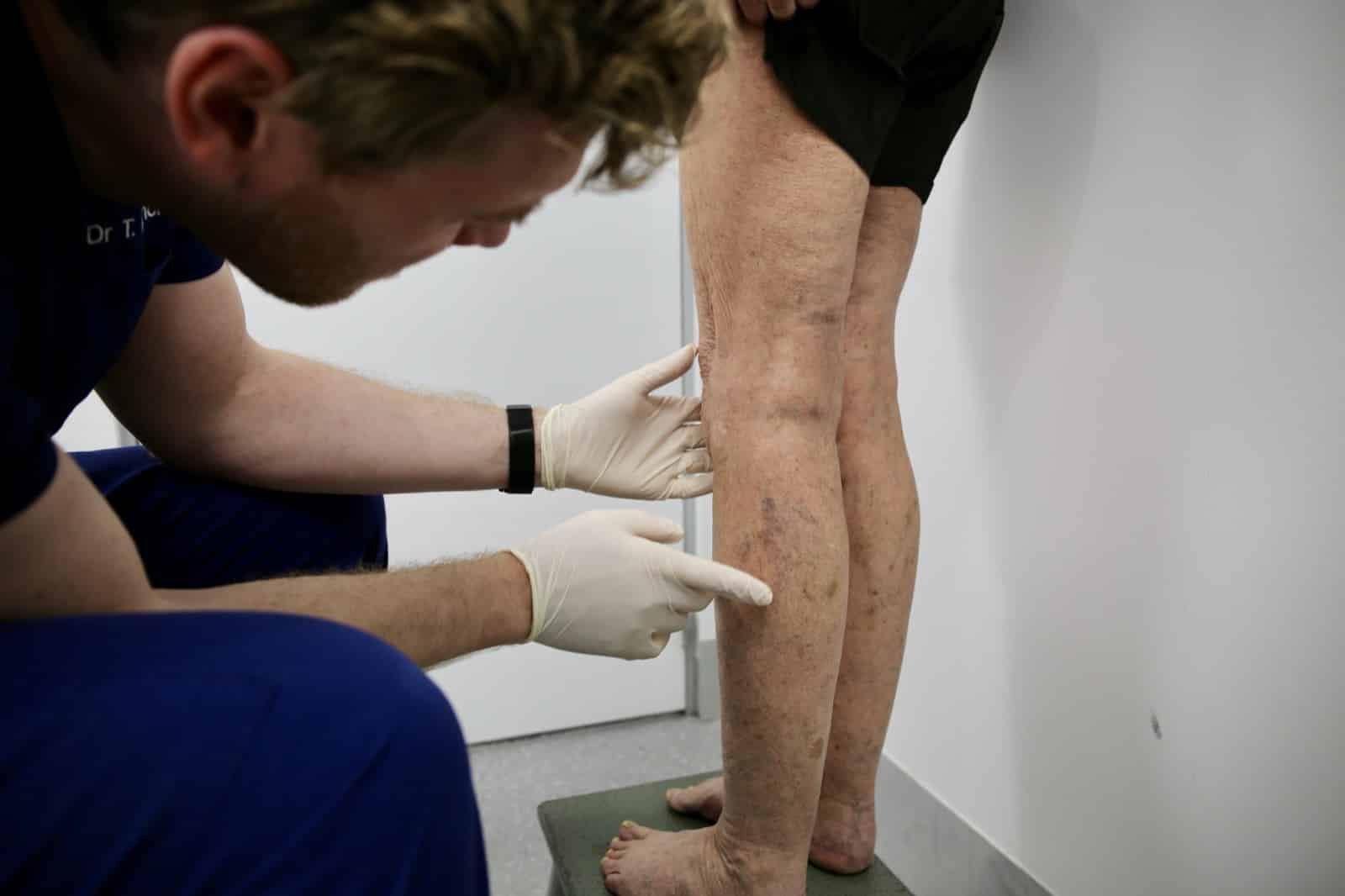
After sclerotherapy, some people notice a firm, tender lump along a treated vein. This is often called trapped blood. It can look a little alarming, but it is a recognised and treatable part of recovery for some people.
This article explains what trapped blood is, why it happens, how it is managed and when to contact your doctor. It is general information, not personal medical advice.
What is trapped blood after sclerotherapy?
Sclerotherapy closes a vein by irritating its wall so it collapses and is gradually absorbed by the body. Sometimes a small amount of blood is left inside the closed section of the vein. Because it has nowhere to drain, it can thicken and form a firm area. Doctors sometimes call this a coagulum.
What it looks and feels like
- A firm lump or cord along the line of a treated vein
- A dark purple, blue or brownish colour under the skin
- Tenderness or mild soreness when the area is touched
- It often becomes noticeable in the weeks after treatment rather than straight away
Why it happens
It is more likely when larger veins are treated, because there is more blood in the vein when it closes. It is not a sign that something went wrong, and it does not happen to everyone. You can read more about how larger veins are treated on our ultrasound guided sclerotherapy page.
Is it the same as a deep vein thrombosis?
No. Trapped blood sits inside the treated, closed section of a surface vein. A deep vein thrombosis (DVT) is a clot in the deep veins of the leg and needs urgent medical attention. Because some symptoms can overlap, any pain or swelling in the calf or the whole leg should be assessed urgently rather than assumed to be trapped blood.
How it is treated
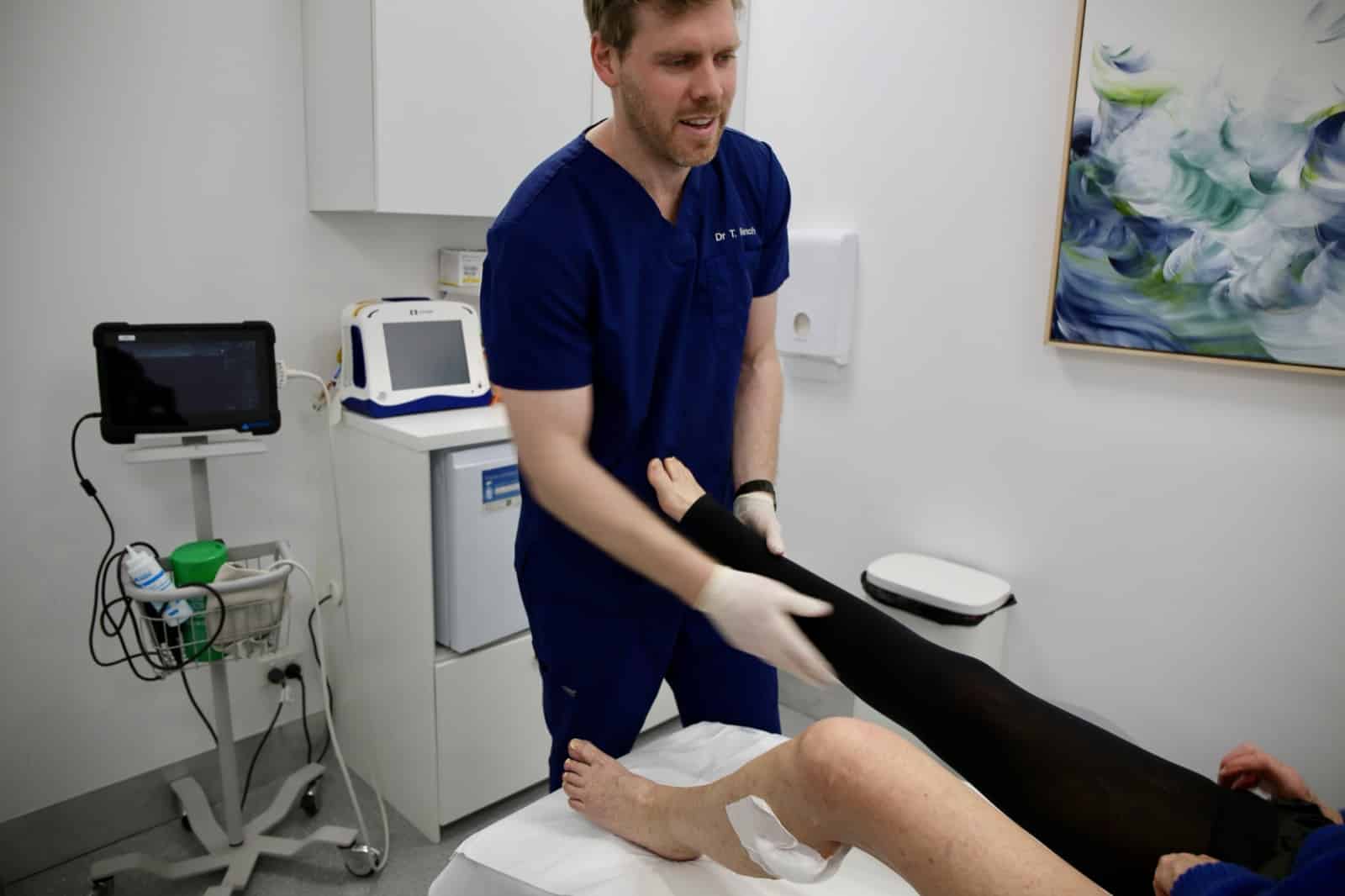
If trapped blood is causing discomfort, your doctor can often release it in the clinic. This usually involves a very small puncture and gentle pressure to let the trapped blood out. Releasing it may ease soreness and may lower the chance of brown staining developing in that area. Your doctor will decide the right timing and explain what to expect and how to keep you comfortable.
Please do not squeeze, lance or pierce the area yourself. Compression stockings and regular walking, as advised by your doctor, support healing in the meantime.
Can it be prevented?
It cannot always be prevented. Following your aftercare advice, including wearing compression for as long as you are told and keeping active, supports recovery after treatment.
When to get advice
Contact MLVC if a lump is getting more painful, or the skin over it becomes red or hot. Mention it at your review even if it is not bothering you.
Seek urgent medical help, or call 000, if you develop pain or swelling in your calf or whole leg, shortness of breath, chest pain or you cough up blood.
Frequently asked questions
What does trapped blood look like?
It usually appears as a firm, darker lump or cord along a treated vein, and it may be tender to touch.
What happens if it is left alone?
The body gradually absorbs it, which can take a long time. Some people are left with brown staining along the vein. We explain this in our article on brown marks after sclerotherapy.
Does trapped blood mean the treatment failed?
No. It is a possible part of the healing process, and your doctor will review how the vein is responding.
How is it different from ordinary bruising?
Bruising is blood in the surrounding tissue and fades with colour changes over weeks. Trapped blood is a firm area inside the vein itself. Our guide to how long bruising lasts after sclerotherapy covers the usual bruising pattern.
Next steps
If you are concerned about a lump after treatment, please contact the clinic. If you are considering treatment, you can book a consultation without a GP referral.
This article is general information about sclerotherapy and is not personal medical advice. Only one of MLVC’s doctors can assess your veins and advise what is right for you.