
Bruising is one of the most common questions people ask before and after sclerotherapy. It is usually a normal part of healing, but the timeline varies from person to person, and it helps to know what to expect and when to ask for advice.
This guide explains the usual pattern of bruising and discolouration after sclerotherapy at Melbourne Leg Vein Centre (MLVC), what affects how long it lasts, and the signs that mean you should get in touch. It is general information, not personal medical advice.
Why bruising happens after sclerotherapy
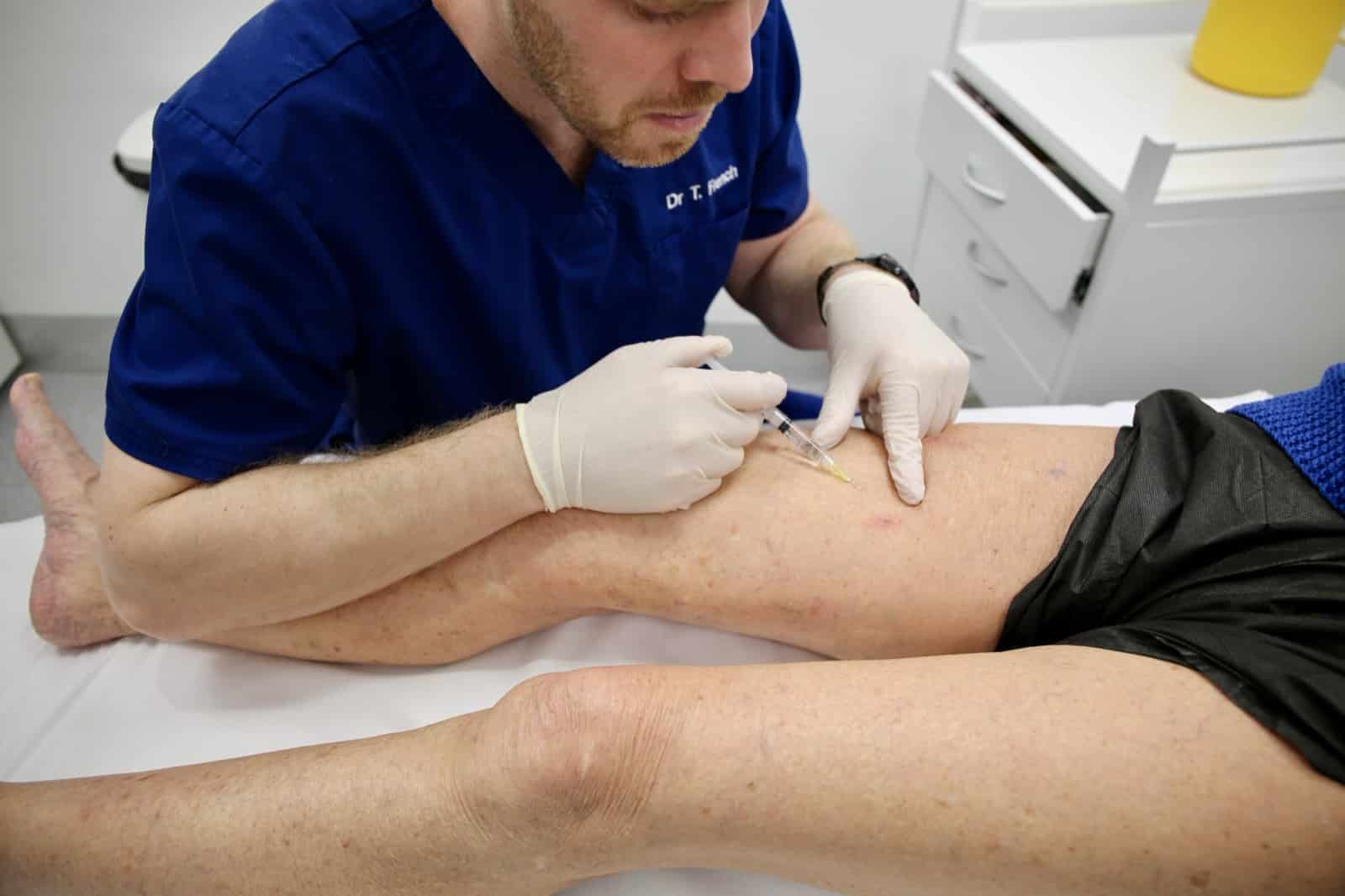
Sclerotherapy involves injecting a solution into a vein through a fine needle. The solution irritates the vein wall so the vein closes and is gradually absorbed by the body. Small amounts of blood can leak into the surrounding tissue at the injection sites and as the treated vein closes, which shows up on the skin as bruising. Treated veins can also look darker, or feel firm, for a while before they fade.
A typical timeline
Many people notice bruising within the first day or two. As it heals, the colour usually changes from purple or blue to green and then yellow. For most people, bruising and redness at treatment sites settle over one to a few weeks.
The treated veins themselves can take longer to fade, because the body is still clearing them. Your doctor will tell you what to expect for your own legs, since the pattern depends on which veins were treated.
Bruising versus brown staining
These two are often confused, but they are different things.
- Bruising is blood in the tissue near the injection site. It changes colour as it heals and normally clears within weeks.
- Brown staining is a brownish mark that can appear along a treated vein. It comes from iron pigment left behind after blood breaks down in the area. It tends to fade more slowly than a bruise, sometimes over several months, and in some people it takes longer still.
We cover staining in more detail in our article on brown marks after sclerotherapy.
What affects how long bruising lasts
- The size and depth of the veins treated
- How many injection sites were treated in the session
- How easily your skin tends to bruise
- Medications that affect bleeding, so always tell your doctor about any blood thinners or aspirin you take
- Your skin tone and how your skin tends to pigment
- How closely you follow your aftercare advice
Looking after your legs afterwards
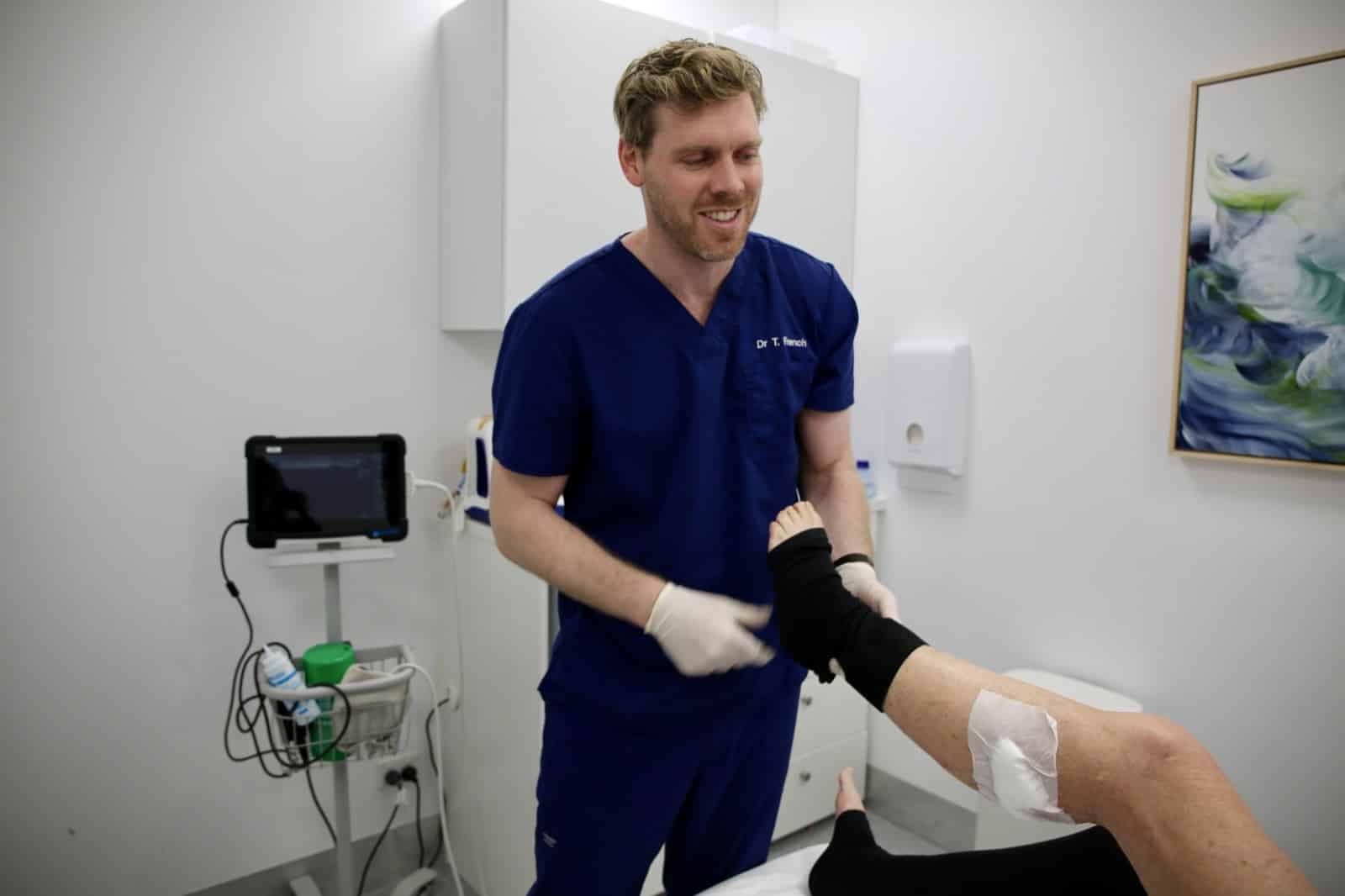
Your doctor will give you aftercare instructions that suit the veins you had treated. These commonly include wearing compression stockings for a period, walking regularly, and easing back into strenuous exercise, hot baths and sun exposure on the treated area as advised. Follow the advice you are given, because it can differ from one person to the next. Our article on compression stockings in a Melbourne summer has practical tips for wearing them comfortably.
When to get advice
Contact MLVC if:
- Bruising is spreading or getting worse after the first few days
- An area becomes increasingly painful, red or hot
- A firm, tender lump develops along a treated vein (see our article on trapped blood after sclerotherapy)
Seek urgent medical help, or call 000, if you develop pain or swelling in your calf or whole leg, shortness of breath, chest pain or you cough up blood.
Frequently asked questions
Is bruising after sclerotherapy normal?
Yes, some bruising is common and expected. How much you get varies between people and depends on the veins treated.
Does more bruising mean the treatment worked better?
No. The amount of bruising is not a measure of how well the treatment has worked. Your doctor assesses the result by reviewing your veins as they heal.
Will the brown marks go away?
Brown staining often fades over time, but how long it takes differs between people. If a mark is bothering you, ask your doctor at your review.
Can I have more treatment while I still have bruising?
That is a decision for your doctor, who will look at the treated area before planning any further sessions.
Do I need a referral to see a doctor at MLVC?
No. You can book a consultation without a GP referral. A referral is only needed if you want to claim a Medicare rebate on a detailed vein-mapping ultrasound scan.
Next steps
If you have questions about bruising, or you are thinking about treating spider or reticular veins, you can read about surface sclerotherapy and ultrasound guided sclerotherapy, or book a consultation. Fees are listed on our fees page.
This article is general information about sclerotherapy and is not personal medical advice. Suitability for any treatment, and the right aftercare for you, can only be decided by one of MLVC’s doctors after an individual assessment.